

Why Does Asthma Cause Nighttime Coughing and Trouble Breathing?
Asthma symptoms can become more noticeable at night because the airways may naturally narrow during sleep, while changes in body position, cooler air, allergens, or mucus can further irritate sensitive airways. This can lead to persistent coughing, chest tightness, wheezing, or difficulty breathing that interrupts restful sleep. Frequent nighttime symptoms may indicate that asthma is not adequately controlled and should be medically evaluated. At We Care Clinic, Dr. Shabnam Qasim, MD, and her team of qualified nurse practitioners evaluate asthma symptoms, identify possible triggers, and develop personalized care plans to support easier breathing and better symptom control. For more information, contact us or schedule an appointment online. We are conveniently located at 1011 Roberts Cut Off Rd, River Oaks, TX 76114.
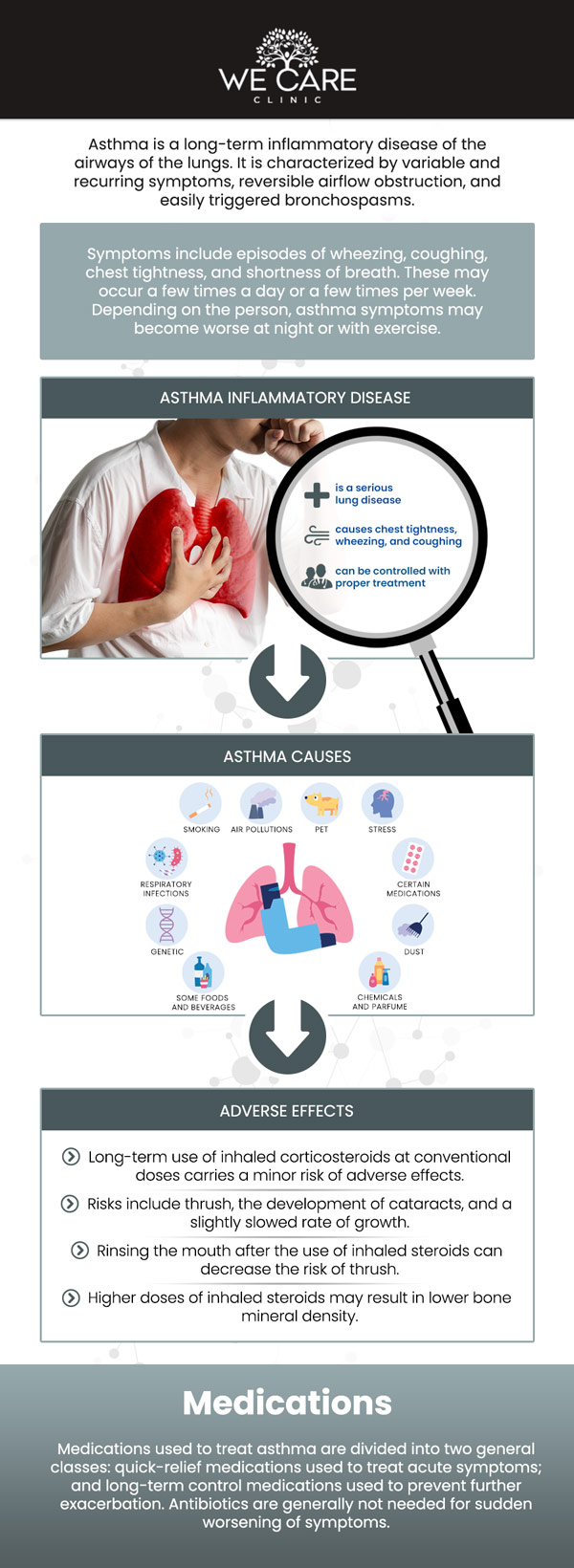
Table of Contents:
Why is my asthma only bad at night?
What is the best sleeping position for nighttime asthma?
Can acid reflux (GERD) trigger asthma attacks while sleeping?
How do I stop coughing from asthma at night?
Understanding Nighttime Asthma Symptoms With Dr. Shabnam Qasim, MD, and her team of qualified Nurse Practitioners
If you find that your asthma symptoms are worse at night, you’re not alone—nocturnal asthma is a common experience for many people living with the condition. Your body’s natural circadian rhythm affects your airways. At night, your body produces lower levels of hormones like cortisol, which typically help control inflammation. This can allow more inflammation in your airways, making symptoms more likely or more severe while you sleep.
Lying down can cause mucus to settle in your airways or make it harder for your lungs to fully expand, which may lead to coughing, wheezing, or shortness of breath. Common allergens such as dust mites or pet dander in your bedding can also trigger asthma symptoms at night. Breathing in cooler nighttime air can irritate your airways and cause them to tighten, while acid reflux when lying down can further irritate the airways and worsen asthma symptoms.
If your asthma isn’t well-controlled, symptoms often show up first at night. Waking up with coughing or shortness of breath is a sign your treatment plan may need to be adjusted. At We Care Clinic, our providers can help you identify nighttime triggers in your environment, review and, if needed, adjust your asthma medications, and offer personalized strategies to help you sleep better and breathe easier.
For many of our patients at We Care Clinic, sleeping on your back with your head and upper body elevated—known as the “semi-Fowler’s position”—can significantly improve asthma symptoms at night. You can achieve this by using extra pillows or an adjustable bed, which helps to keep your airways open, reduces pressure on your lungs, and minimizes the risk of acid reflux that can worsen asthma symptoms.
Another position some of our patients find helpful is sleeping on the left side. This may also help improve airflow and decrease acid reflux, both of which can contribute to easier breathing during the night. We recommend avoiding lying flat on your back without elevation, or sleeping on your stomach, as these positions may put extra pressure on your lungs and chest, making breathing more difficult.
At We Care Clinic, we know that everyone is different. The best sleeping position can vary from person to person. Pay attention to how your body feels in different positions, and choose what helps you breathe easiest.
When you lie down to sleep, stomach acid can more easily flow back into your esophagus—and sometimes, even reach your throat or airways. This acid irritation can cause inflammation and narrowing of your breathing passages, leading to asthma symptoms such as wheezing, coughing, shortness of breath, and chest tightness. This is why many people with asthma notice their symptoms getting worse at night.
Nocturnal acid reflux is especially problematic because your body’s natural defenses, like swallowing and saliva production, slow down while you sleep, making it easier for acid to linger and cause irritation. Research shows that managing GERD can play a crucial role in controlling asthma, especially for those who struggle with nighttime symptoms.
At We Care Clinic, our experienced providers can help you identify if acid reflux might be contributing to your asthma. We offer personalized evaluation of your symptoms, guidance on lifestyle adjustments such as elevating the head of your bed and avoiding trigger foods before bedtime, medication management if appropriate, and support with ongoing asthma management to improve your sleep and quality of life.
Nighttime coughing from asthma can often be reduced by improving overall asthma control and limiting triggers that may worsen symptoms during sleep. Helpful steps include:
• Follow your asthma treatment plan: Taking prescribed asthma medications as directed can help reduce nighttime symptoms.
• Reduce bedroom triggers: Keep bedding clean, limit dust, keep pets out of the bedroom, and avoid strong odors or smoke.
• Elevate your upper body: Sleeping with your head and upper body slightly raised may help reduce coughing when lying flat.
• Maintain comfortable air quality: Avoid overly dry air and keep humidifiers clean to prevent mold buildup.
• Keep quick-relief treatment accessible: Have your rescue inhaler nearby in case sudden asthma symptoms develop.
• Manage acid reflux: Reflux can worsen nighttime coughing and asthma symptoms, especially when lying down.
• Seek medical evaluation if symptoms continue: Persistent nighttime coughing, wheezing, or shortness of breath may indicate that asthma is not well controlled.
At We Care Clinic, our team can evaluate ongoing nighttime asthma symptoms, identify possible triggers, and review your current asthma management plan. If coughing, wheezing, or breathing difficulty continues at night, timely medical care can help improve symptom control and support more restful sleep.
Board-certified internal medicine physician Dr. Shabnam Qasim, MD, and her team of qualified nurse practitioners evaluate nighttime asthma symptoms by reviewing when coughing, wheezing, chest tightness, or shortness of breath occurs and how often these symptoms interrupt sleep. They also consider common nighttime triggers, including allergens, cooler air, sleeping position, acid reflux, and overall asthma control. A careful evaluation helps determine whether symptoms are related to uncontrolled asthma or another condition affecting breathing during sleep.
Based on each patient’s symptoms and health history, Dr. Qasim and her team develop an individualized asthma management approach focused on improving nighttime breathing and reducing flare-ups. This may include reviewing current treatment, identifying avoidable triggers, discussing sleep-related habits, and monitoring symptom patterns over time. Regular follow-up also allows the team to assess progress and make appropriate adjustments when needed, helping patients maintain better asthma control and experience more restful, uninterrupted sleep.
For more information, contact us or schedule an appointment online. We are conveniently located at 1011 Roberts Cut Off Rd, River Oaks, TX 76114. We serve patients from River Oaks TX, Sansom Park TX, Fort Worth TX, Saginaw TX, Haltom City TX, Benbrook TX and surrounding areas.

Check Out Our 5 Star Reviews


Additional Services You May Need
▸ Diabetes
▸ High Blood Pressure
▸ Heart Disease
▸ Annual Physicals
▸ COPD
▸ Primary Care
▸ Weight Loss
▸ Hormone Therapy
▸ IV Therapy
▸ Botox
▸ Fillers
▸ Allergy Testing
▸ Asthma
▸ Stroke
▸ Geriatric Care
▸ Depression & Anxiety
▸ Obesity
▸ Mental Health Evaluation
▸ Slim Shots
▸ Infusion Therapy
▸ Post Covid
▸ Low Testosterone
▸ Low-dose Naltrexone (LDN)
▸ Supplements and Nutrition
▸ Same-Day Primary Care
▸ Sick Visits
▸ Preventive Health Screenings




 Send Text
 How May I Help You?