

What Is the Difference Between HDL and LDL?
Cholesterol is an essential substance your body uses to build healthy cells, but keeping your blood vessels clear requires balancing its two main carriers. High-Density Lipoprotein (HDL) acts as the “good” cholesterol by sweeping up excess cholesterol in your bloodstream and returning it to your liver to be safely removed. Conversely, Low-Density Lipoprotein (LDL) is the “bad” cholesterol that deposits extra fats onto your artery walls, leading to dangerous plaque buildup over time. To help you maintain a healthy balance and protect against heart disease, Dr. Shabnam Qasim, MD, and a team of skilled Nurse Practitioners at We Care Clinic provide comprehensive cholesterol evaluations and personalized cardiovascular care. For more information, contact us or schedule an appointment online. We are conveniently located at 1011 Roberts Cut Off Rd, River Oaks, TX 76114.
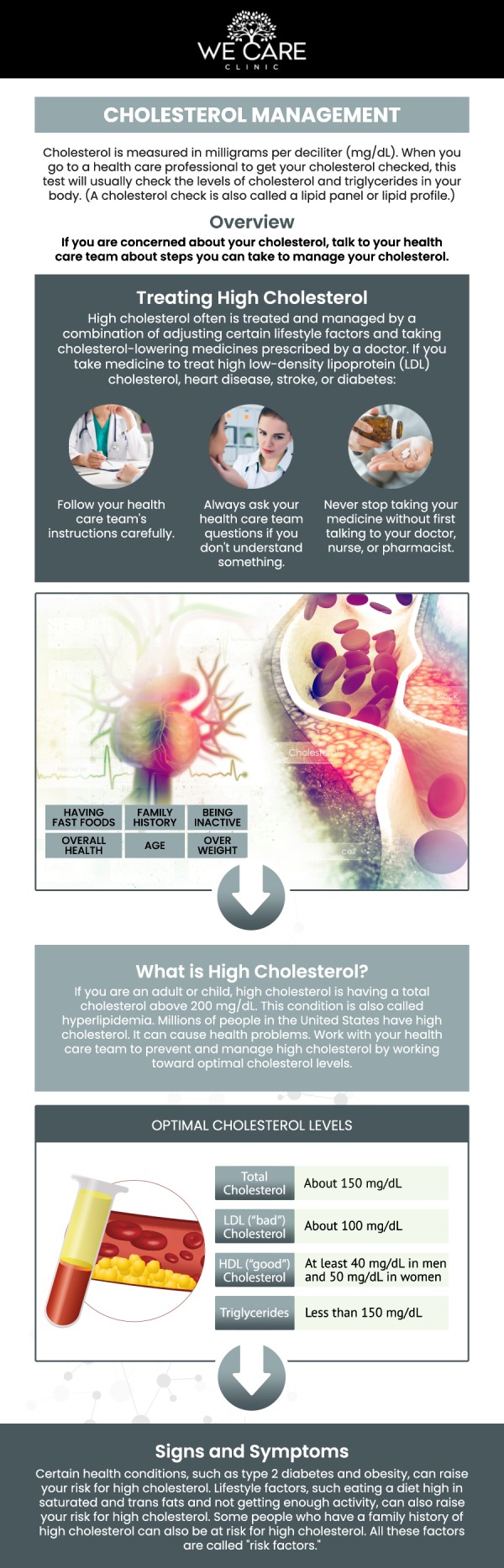
Table of Contents:
What is HDL cholesterol, and why is it considered beneficial for heart health?
What is LDL cholesterol, and how can high levels affect your health?
What factors can influence HDL and LDL cholesterol levels?
How can lifestyle changes help maintain healthy HDL and LDL cholesterol levels?
Most Asked Questions by Our Patients
Do I have to fast before my cholesterol test?
Can I lower my cholesterol without medication?
Are eggs bad for my cholesterol?
What are the symptoms of high cholesterol?
Understanding Cholesterol Levels With Dr. Shabnam Qasim, MD, and her team of qualified Nurse Practitioners at We Care Clinic in River Oaks, TX
When patients visit us at We Care Clinic, one of the most common questions we hear during wellness exams is, “What do my cholesterol numbers actually mean?” It is easy to get confused by the medical jargon, but understanding your heart health doesn’t have to be complicated.
Cholesterol itself isn’t the enemy—it is a waxy, essential building block your body uses to create healthy cells and hormones. The secret to great cardiovascular health lies in the balance between two very different types of cholesterol: HDL and LDL. Here is how Dr. Shabnam Qasim, MD, and a team of skilled Nurse Practitioners at We Care Clinic break down these crucial numbers for our patients.
HDL (High-Density Lipoprotein) is your body’s internal clean-up crew. At We Care Clinic, we love seeing high HDL numbers because this is the “good” cholesterol that actively protects your heart.
You can think of HDL as a fleet of microscopic recycling trucks patrolling your bloodstream. As it travels through your body, HDL scoops up excess, unused cholesterol that is lingering in your blood vessels and hauls it straight back to your liver. Once there, the liver breaks it down and flushes it out of your system.
Why is this beneficial? Because the more HDL you have circulating in your blood, the less cholesterol is left behind to stick to your artery walls. Robust HDL levels act as a natural shield, dramatically lowering your risk of heart attacks and strokes.
LDL (Low-Density Lipoprotein) is the exact opposite. Often called the “bad” cholesterol, LDL acts less like a recycling truck and more like a careless delivery driver dropping off unwanted packages directly into your arteries.
When your body has more LDL than it needs, this waxy substance begins to cling to the inner walls of your blood vessels. Over time, this unwanted buildup calcifies into a hard, thick barrier known as plaque (a condition called atherosclerosis).
High levels of LDL can silently but severely impact your health by:
• Creating Traffic Jams in Your Arteries: As plaque builds up, your arteries become narrow and stiff, forcing your heart to work overtime to push oxygen-rich blood to your vital organs.
• Triggering Blood Clots: Plaque is unstable. If a piece ruptures, your body tries to heal it by forming a blood clot. This clot can completely block the artery.
• Causing Life-Threatening Emergencies: When arteries leading to the heart or brain become too narrow or blocked, it becomes the leading cause of chest pain (angina), heart attacks, and strokes.
During your consultation, Dr. Qasim and our team will look at the whole picture of your health, because your cholesterol levels are influenced by a unique mix of genetics and daily choices.
Key factors include:
• The Foods You Love: Diets rich in saturated fats (found in fatty meats and full-fat dairy) and trans fats (hidden in many processed and fried foods) are the biggest culprits for driving up LDL. On the flip side, eating foods rich in omega-3s and fiber can naturally boost your protective HDL.
• Your Body Weight: Carrying extra weight alters how your body processes fats, often leading to higher LDL, lower HDL, and elevated triglycerides.
• How You Move: A sedentary lifestyle allows bad cholesterol to accumulate. Lack of physical activity directly suppresses your “good” HDL clean-up crew.
• Tobacco Use: Smoking doesn’t just damage your lungs; it scars your blood vessels, making it easier for LDL to stick, while actively destroying your healthy HDL cholesterol.
• Age and Genetics: As we age, our liver naturally becomes less efficient at filtering out LDL. Furthermore, some patients inherit a condition (familial hypercholesterolemia) that causes high LDL regardless of how perfectly they eat or exercise.
The most empowering thing we tell our patients is that your cholesterol numbers are not set in stone. Your lifestyle is your best medicine. Dr. Shabnam Qasim and a team of skilled Nurse Practitioners at We Care Clinic frequently help patients design personalized, totally manageable plans to flip their cholesterol numbers in the right direction.
Here is how you can take control:
• Eat for Your Heart: Swap out heavy saturated fats for heart-loving unsaturated fats like olive oil, avocados, and almonds. Load up on soluble fiber—found in oatmeal, lentils, and apples—which acts like a sponge to absorb and eliminate LDL cholesterol.
• Get Your Blood Pumping: Just 30 minutes of brisk walking, swimming, or cycling five days a week is proven to significantly boost your HDL levels while helping to manage your weight.
• Shed Extra Pounds: Losing even a small percentage of your body weight can profoundly improve your lipid profile, dropping your LDL and raising your HDL.
• Ditch the Cigarettes: Quitting smoking is one of the fastest ways to improve your HDL levels. Within just a few weeks of quitting, your blood circulation and lung function improve, and your heart disease risk begins to plummet.
When discussing cholesterol, our patients usually have a few common concerns. Here are the answers we share most often at the clinic:
For the most accurate reading of your LDL and triglyceride levels, we typically recommend fasting (no food, only water) for 9 to 12 hours before your blood draw. We will always give you clear instructions before your appointment.
Absolutely. For many patients, aggressive lifestyle changes—like improving diet and increasing exercise—are enough to bring their numbers into a healthy range. However, if your high cholesterol is genetic, medication might be necessary to keep you safe, and we will guide you through your best options.
For years, eggs got a bad reputation. However, modern research shows that dietary cholesterol (like the kind in egg yolks) doesn’t raise blood cholesterol nearly as much as saturated and trans fats do. For most people, eggs can absolutely be part of a heart-healthy diet.
This is the most important thing to remember: there are no symptoms. You cannot feel plaque building up in your arteries, and you will not feel sick if your LDL is too high. That is why routine testing is a non-negotiable part of your preventative care.
Because high cholesterol operates completely silently, the only way to know the truth about your heart health is through a simple, quick blood test called a lipid panel.
That is where we come in. At We Care Clinic in River Oaks, TX, we believe in proactive, compassionate care. Dr. Shabnam Qasim, MD, and a team of skilled Nurse Practitioners at We Care Clinic take the time to sit down with you, explain exactly what your unique HDL and LDL numbers mean, and create a realistic roadmap to protect your cardiovascular future.
Whether you need a routine checkup, nutritional counseling, or medical management to get your cholesterol under control, we are here for you. Don’t leave your heart health to chance—contact We Care Clinic today to schedule your comprehensive wellness exam! For more information, contact us or schedule an appointment online. We are conveniently located at 1011 Roberts Cut Off Rd, River Oaks, TX 76114. We serve patients from River Oaks TX, Sansom Park TX, Fort Worth TX, Saginaw TX, Haltom City TX, Benbrook TX and surrounding areas.

Check Out Our 5 Star Reviews


Additional Services You May Need
▸ Diabetes
▸ High Blood Pressure
▸ Heart Disease
▸ Annual Physicals
▸ COPD
▸ Primary Care
▸ Weight Loss
▸ Hormone Therapy
▸ IV Therapy
▸ Botox
▸ Fillers
▸ Allergy Testing
▸ Asthma
▸ Stroke
▸ Geriatric Care
▸ Depression & Anxiety
▸ Obesity
▸ Mental Health Evaluation
▸ Slim Shots
▸ Infusion Therapy
▸ Post Covid
▸ Low Testosterone
▸ Low-dose Naltrexone (LDN)
▸ Supplements and Nutrition
▸ Same-Day Primary Care
▸ Sick Visits
▸ Preventive Health Screenings




 Send Text
 How May I Help You?